Modern Continuing Medical Education (CME) Protocols and Their Role in Enhancing Healthcare Practitioners’ Competence

Modern Continuing Medical Education (CME) Protocols and Their Role in Enhancing Healthcare Practitioners’ Competence
Introduction
In the healthcare sector, quality and competence are among the most critical factors determining the level of patient care. With rapid scientific and technological advancements, it has become essential for healthcare practitioners to stay updated to ensure safe and effective care. In this context, modern Continuing Medical Education (CME) protocols serve as a strategic tool to enhance the skills of doctors, nurses, and healthcare technicians, improving their professional competence, which directly impacts the quality of healthcare and patient safety.
First: What Are CME Protocols?
Continuing Medical Education (CME) is an ongoing training program designed to update healthcare practitioners’ knowledge and practical skills after graduation. Modern CME protocols differ from traditional training by focusing on evidence-based practical learning and employing interactive teaching methods that facilitate immediate application of skills in real work environments.
Objectives of CME protocols include:
- Enhancing up-to-date medical knowledge.
- Developing practitioners’ practical and technical skills.
- Promoting adherence to healthcare standards and protocols.
- Improving healthcare quality and reducing medical errors.
Second: Components of Modern CME Protocols
1. Evidence-Based Training
Relies on the latest studies and scientific research to ensure the information and skills acquired are accurate and effective.
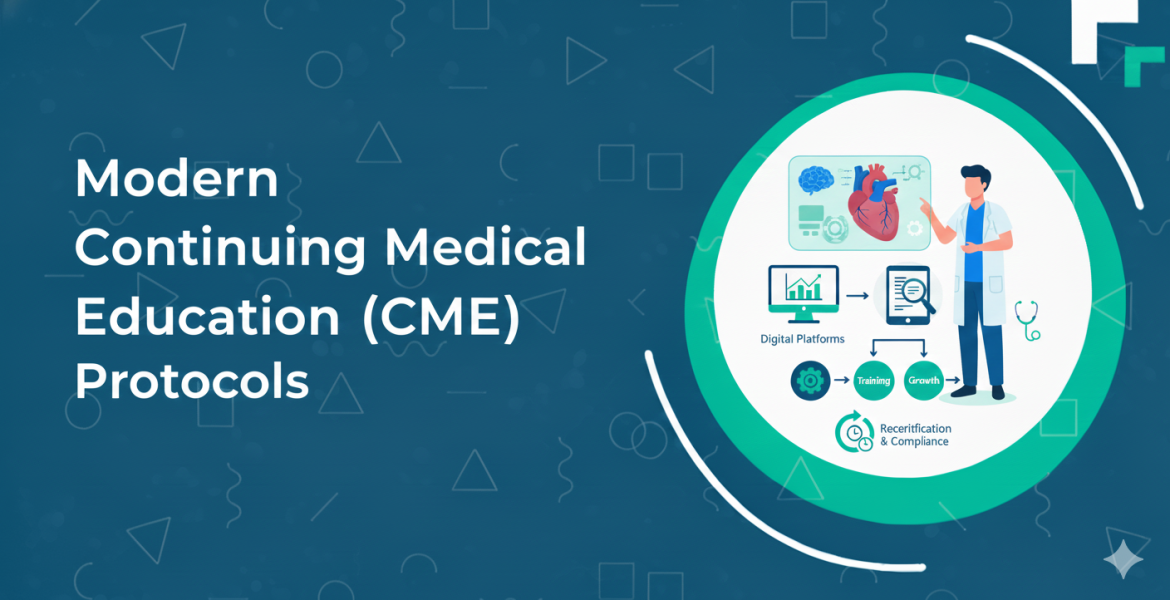
2. Use of Technology and Digital Learning
Includes e-learning, practical simulations, and interactive digital tools that provide a more flexible and directly applicable learning experience.
3. Continuous Assessment and Feedback
This mechanism measures how well trainees grasp the skills and allows immediate correction of any gaps, enhancing the practical value of training.
4. Linking CME to Professional Certifications
Providing accredited CME hours connected to professional credentials (e.g., SC or health councils) increases practitioners’ commitment to participating in programs and motivates them to improve their professional performance.
Third: Impact of CME on Healthcare Practitioners’ Competence
• Enhancing Knowledge and Practical Skills
Continuous training allows practitioners to stay up-to-date with the latest medical methods and technologies, improving their ability to provide advanced and safe care.
• Reducing Medical Errors and Improving Care Quality
Healthcare professionals trained under CME protocols are better equipped to apply correct procedures and handle complex cases efficiently, reducing errors and increasing patient satisfaction.
• Increasing Professional Confidence and Decision-Making Ability
Ongoing training equips practitioners with updated tools and knowledge, enabling accurate and timely decisions, especially in emergencies or complex situations.
• Promoting Adherence to Modern Standards and Protocols
CME programs connect practitioners to evidence-based practices and encourage compliance with the latest standards, enhancing service quality and ensuring patient safety.
Fourth: Strategies for Effective CME Implementation
• Identify Training Needs Based on Practical Realities
Analyzing practitioners’ strengths and weaknesses ensures the design of CME programs that meet actual needs and directly impact performance quality.
• Develop Interactive and Diverse Programs
Combining workshops, practical simulations, and e-learning enhances skill comprehension and practical application in real work settings.
• Measure CME Impact on Performance and Continuous Improvement
Monitoring training outcomes and evaluating practitioners’ performance after programs helps refine content and ensure training effectiveness.
• Encourage Participation Through Professional Incentives and Accredited Certificates
Providing accredited certificates and professional incentives motivates practitioners to actively participate and apply what they learned, enhancing overall institutional competence.
Conclusion
Modern Continuing Medical Education (CME) protocols are the cornerstone for enhancing healthcare practitioners’ competence. They provide knowledge, practical skills, and adherence to modern standards that ensure high-quality care. Investing in continuous CME programs is not merely an individual improvement effort but a strategic investment in overall healthcare quality, ensuring that healthcare institutions can efficiently and professionally keep up with modern developments and challenges.